The world’s second-largest Hindu temple is in New Jersey
Visiting BAPS Swaminarayan Akshardham in Robbinsville, New Jersey

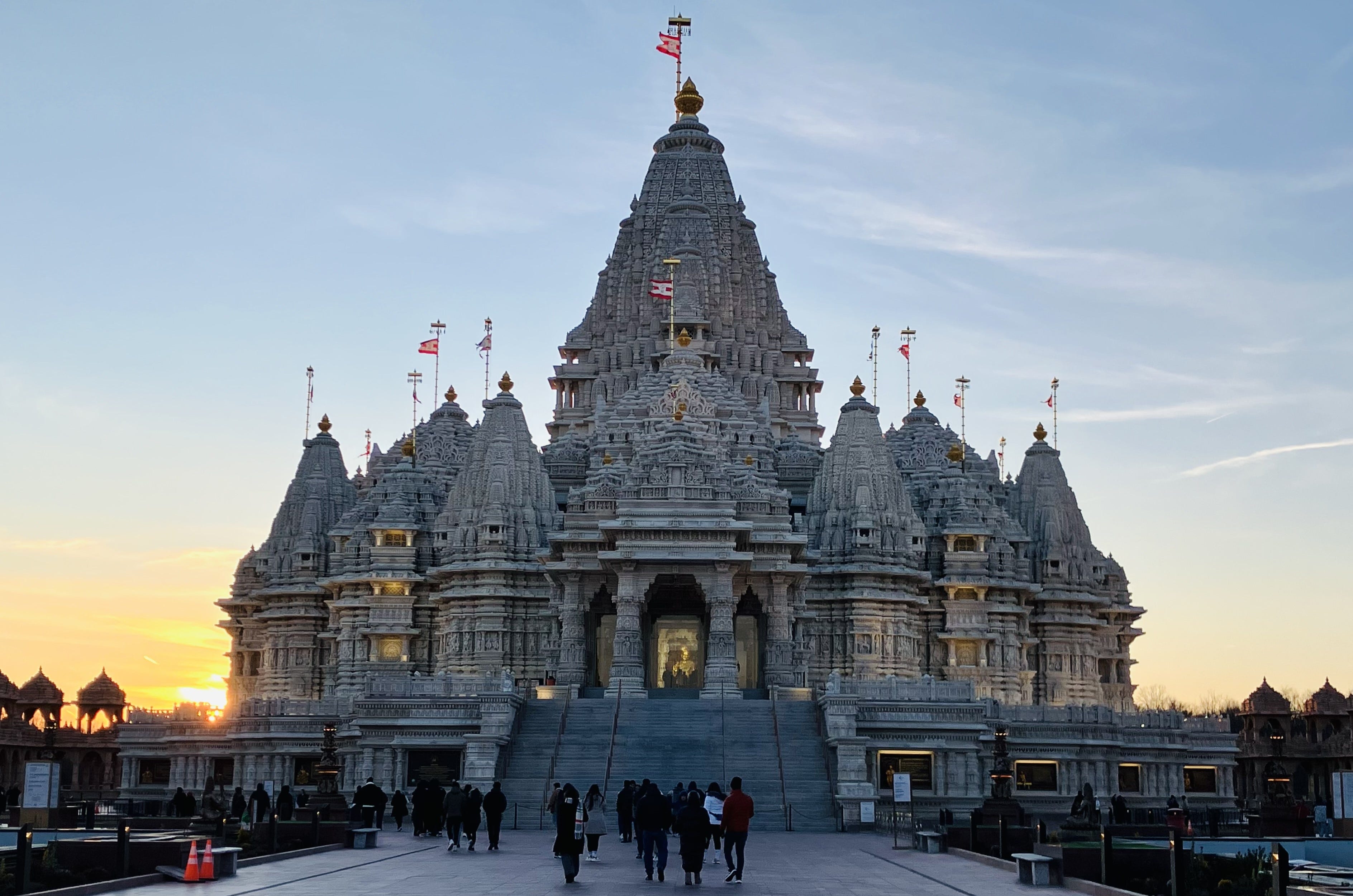
When I first read about the opening of the BAPS Swaminarayan Akshardham, I knew I had to visit. From early descriptions and photos, it was clear that this place was something special — a magnificent Hindu temple that happened to be located in suburban New Jersey, not far from my hometown.
On a frigid afternoon in January, 2025, hours before a snowstorm hit, my partner and I visited the temple. Here’s an account of everything I found most fascinating, impressive, and disturbing about this marvel of modern architecture.
Why New Jersey?
Bochasanwasi Akshar Purushottam Swaminarayan Sanstha (BAPS) is a Hindu denomination that worships the yogi Swaminarayan (1781–1830) as God.
Akshardham means eternal abode. Thus, the name of the temple in Robbinsville — Swaminarayan Akshardham — names the temple as an eternal abode for Swaminarayan.
The BAPS organization is internationally oriented, with more than 1,300 mandirs (Hindu temples) and 5,000 centers worldwide. These include spectacular temples in major cities like Nairobi, London, Toronto, Chicago… and, of course, Robbinsville, New Jersey.
Actually, Robbinsville isn’t a city at all, but rather a township with a population of 15,000. Now, this little town is home to the largest BAPS temple of them all, as well as the organization’s North American headquarters.


Robbinsville was a surprisingly perfect fit for a 185-acre Hindu temple campus.
Robbinsville is small, but you’re never far from a crowd in New Jersey. Robbinsville is close to medium-sized cities like Trenton and Princeton and is centrally located between Philadelphia and New York. Proximity to these major metro areas (and their international airports) made the site reasonably accessible for international visitors — first, for the volunteers who traveled from afar to build the temple, and now, for the tourists and Hindu pilgrims who visit.
Meanwhile, New Jersey is both the most densely populated US state and the one with the highest proportional population of people identifying as Indian (4.6%) and Hindu (3%). Just north of Robbinsville, Middlesex County is home to a district known as “Little India,” as well as one of the highest proportions of Indian American residents of any US county (over 40%).
So, it’s easy to see why central New Jersey was a desirable location for BAPS. But, it’s surprising that they were able to gain permission to build something so grand in a place like Robbinsville.
Robbinsville is charming, with a distinct small-town feel. The neighboring town of Windsor, just outside of the temple site, is full of beautiful historic homes.
“When you come over the hill from West Windsor, you are looking at what the town looked like 200 years ago, with farms and fields, and here we were proposing to build a large Hindu temple that might be visible from that space.”
— Thomas Halm, who represented BAPS in the Robbinsville approval process, via Community News
If you have any experience working for or against the approval of a major construction project in a small town, you know that such ventures are often enthusiastically opposed by local officials and residents. The intensity of the opposition is proportional to the smallness of the town and the bigness of the project.
In Robbinsville, a foreign group wanted to build a massive place of worship in a very small town. The project shouldn’t have had a chance. Yet, according to local reporting, the township’s population and decision-makers were open-minded and receptive.
Throughout the approval process, BAPS representatives successfully responded to residents’ concerns. This included floating a blimp to the proposed height of the temple in order to analyze the project’s potential effects on local views.
“Wherever they could see the blimp, they modified their plans so that the building would be invisible to the surrounding area.” — Thomas Halm


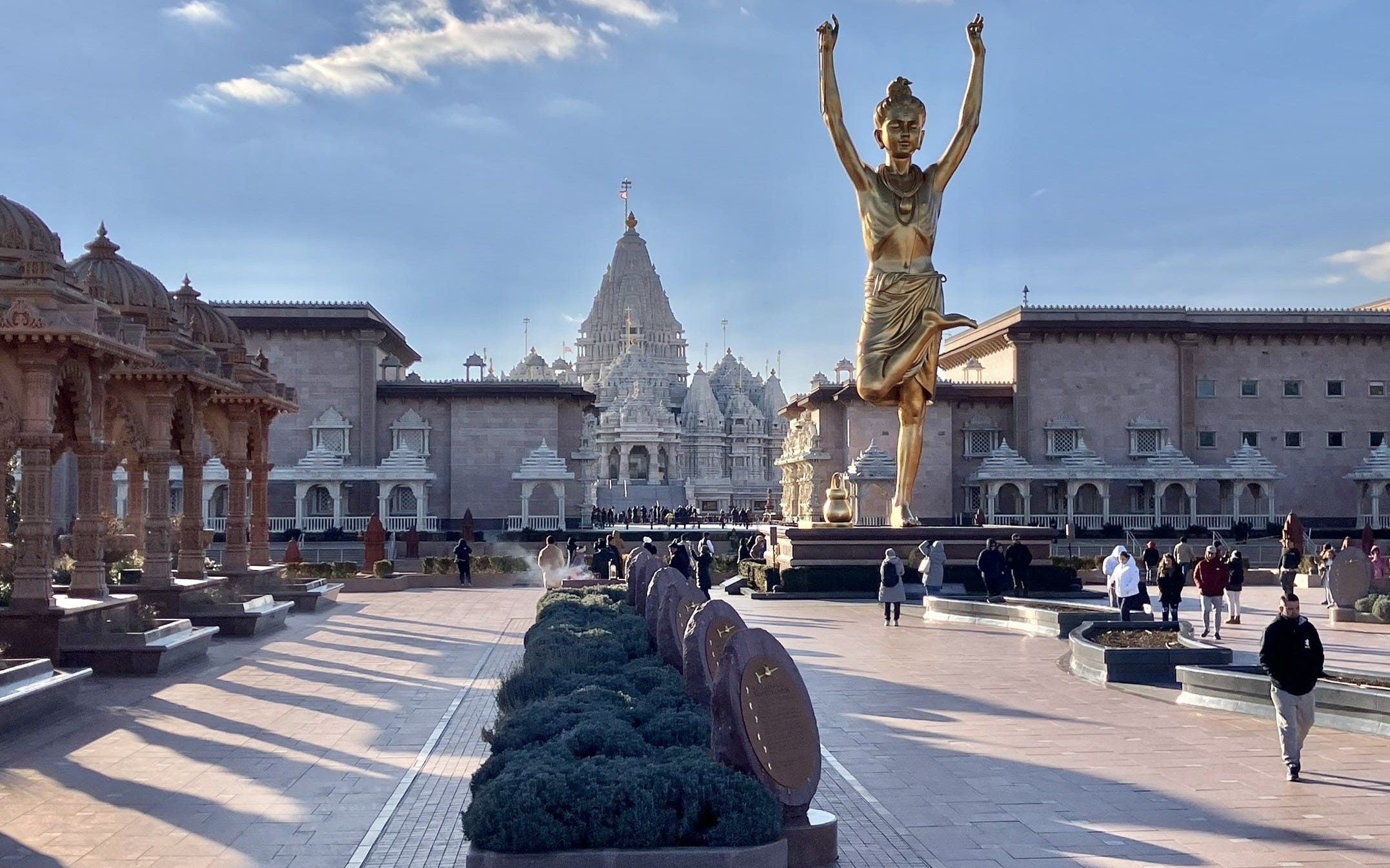
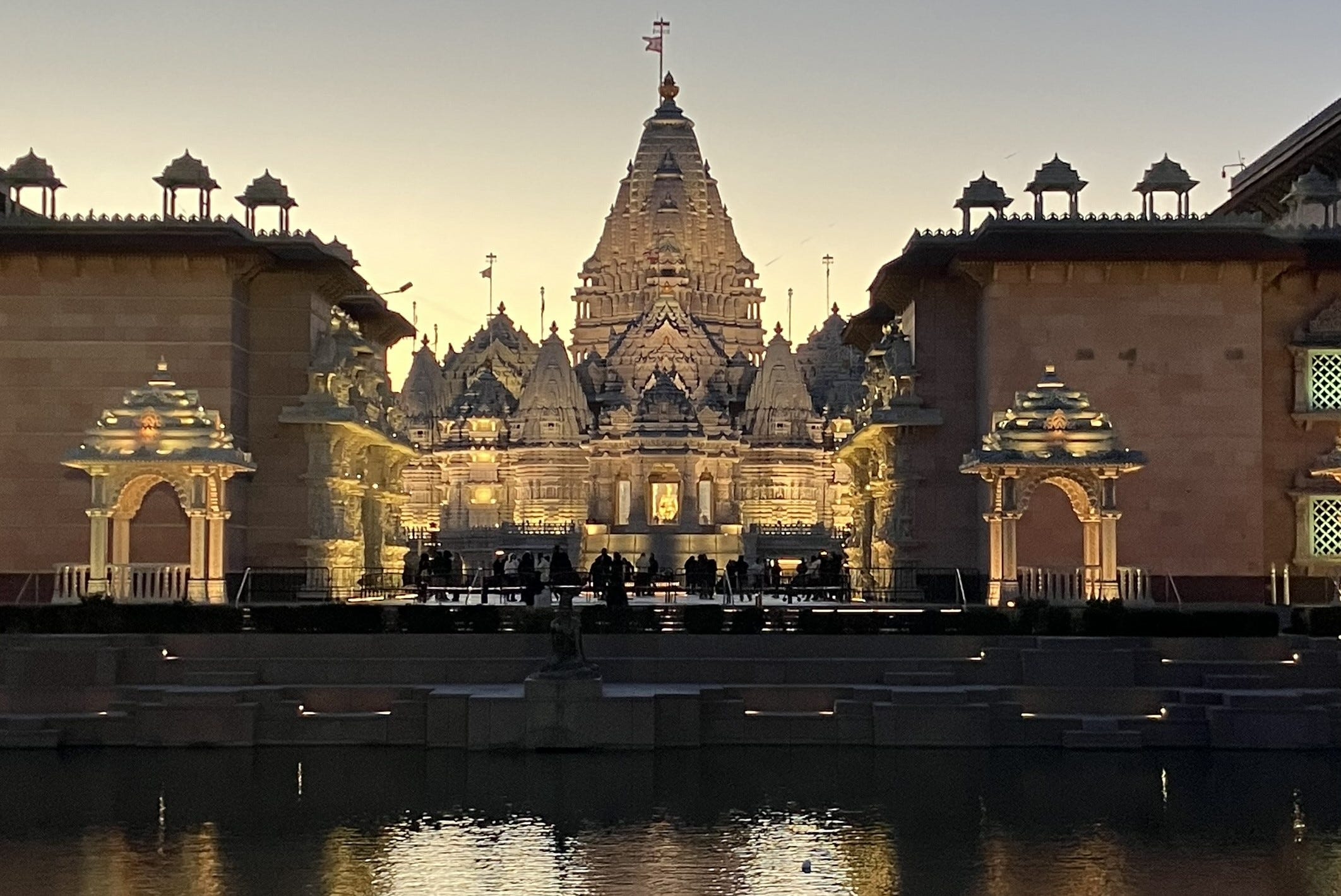
Although the campus is enormous and the temple is 191 ft (58 m) high, the site is mostly concealed by woods — a sort of hidden wonderland, just around the corner.
Construction and controversy
After gaining the necessary permissions, BAPS broke ground in 2014.
The following year, an eight-year construction process began, powered largely by 12,500 volunteers who came from all over the world to work for days, weeks, months, or even years. Many had no relevant experience, but they were assigned serious tasks. Volunteers helped with everything from design and engineering to stone carving, providing the bulk of the project’s skill and muscle.
The details of the construction process, and the results, are incredible.
An estimated 4.7 million labor hours went into building the temple and campus. The mandir’s size of 655,591 square meters makes it the second-largest Hindu temple in the world.
The volunteer workforce saved BAPS millions in labor expenses, but the project still cost $96 million. This price tag almost seems low, considering that the mandir is made primarily from 68,000 cubic feet of Italian Carrara marble, a luxury material that’s in limited supply. The marble, along with limestone and other materials, was quarried in Europe, sent to India to be worked on by craftspeople, and then shipped to Robbinsville for assembly.
It’s hard to comprehend that most of the construction and craftwork was performed by non-professionals. However, volunteerism is a key tenet of Hinduism, characterized by the Sanskrit word seva. Seva refers to selfless service — performing helpful deeds with no expectation of reward.
On the walls around the campus, there are photos of individual volunteers, along with their inspirational tales of travel and service. The BAPS website says that the Akshardham is “the epitome of volunteerism and serves as a symbol to show the value of sacrificing one’s time and efforts towards bettering the community.”
The construction of the temple is a shining triumph of seva, but accusations of labor exploitation suggest that the volunteer experience may have varied significantly from person to person.
In 2021, a group of workers filed a lawsuit accusing BAPS of luring poor workers from India to New Jersey, then forcing them to work 87 hours per week for a wage of around $1 per hour. Allegedly, BAPS targeted low-caste workers, confiscated their passports upon arrival, and confined them (under threat of punishment) to the worksite during their stay.
At least two deaths occurred as a result of temple construction activities: a 57-year-old man died in 2022 from an unspecified “construction accident,” and a 16-year-old boy died from a 45-foot fall in 2017.
In their response to the allegations of labor exploitation, BAPS stated that the workers were volunteers, not employees, and that the organization provided financial support for their families in India. As of the most recent reporting on the case, the lawsuit is still pending.
Visiting BAPS Swaminarayan Akshardham
Activist Sunita Viswanath, founder of the group Hindus for Human Rights, told NBC News in 2023:
“I would want anybody who goes to the temple to really ask themselves, really do some soul searching, about going to a temple where there are such serious allegations of labor and human rights violations.”
Having read a little about the allegations before our visit, I had mixed feelings as I took in the temple’s splendor. I also contemplated the enormous wealth and power, in the hands of religious leaders, that’s required to bring such a project to fruition.
Nevertheless, we chose to visit, and it was quite a sight to behold.
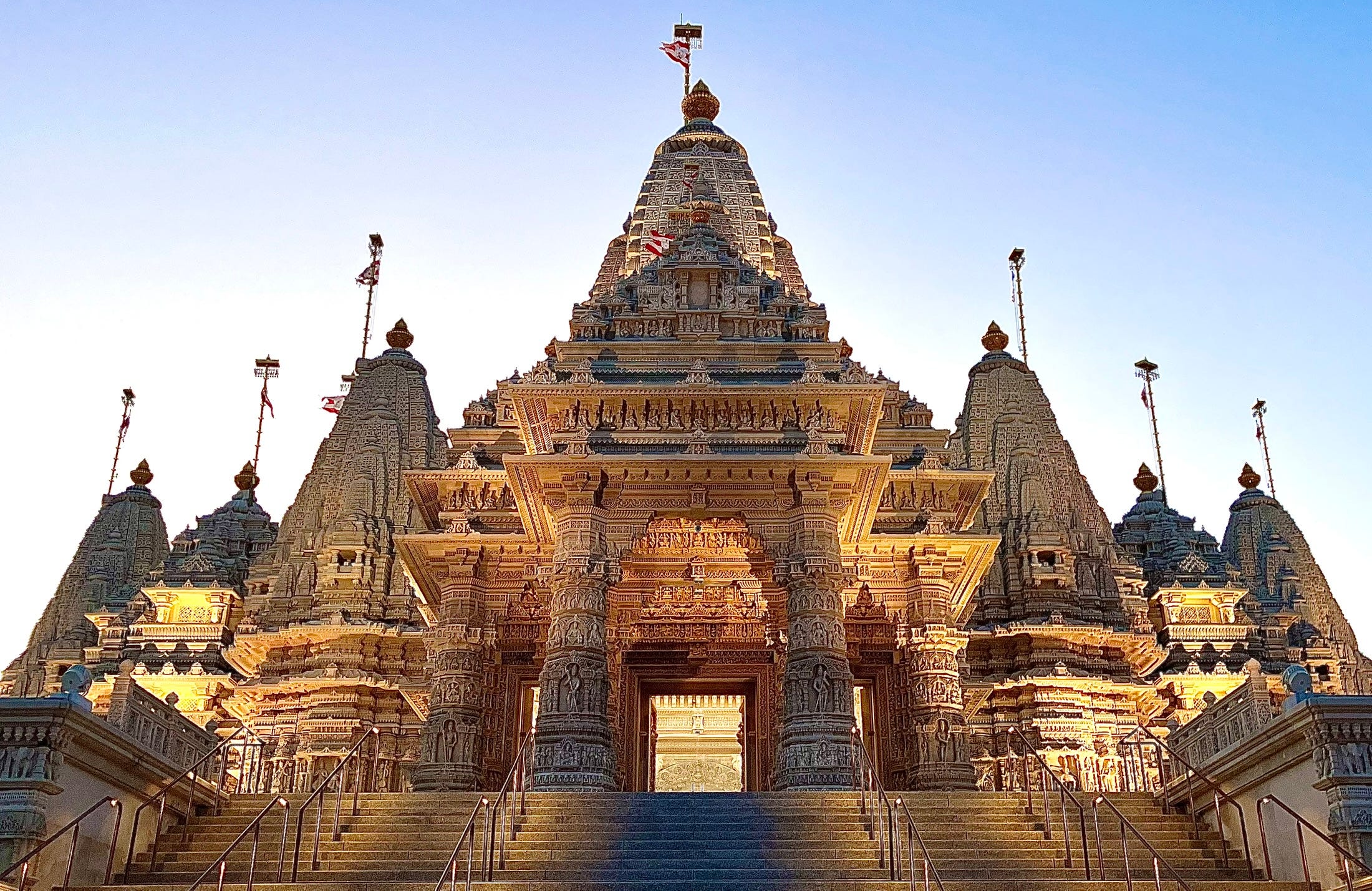
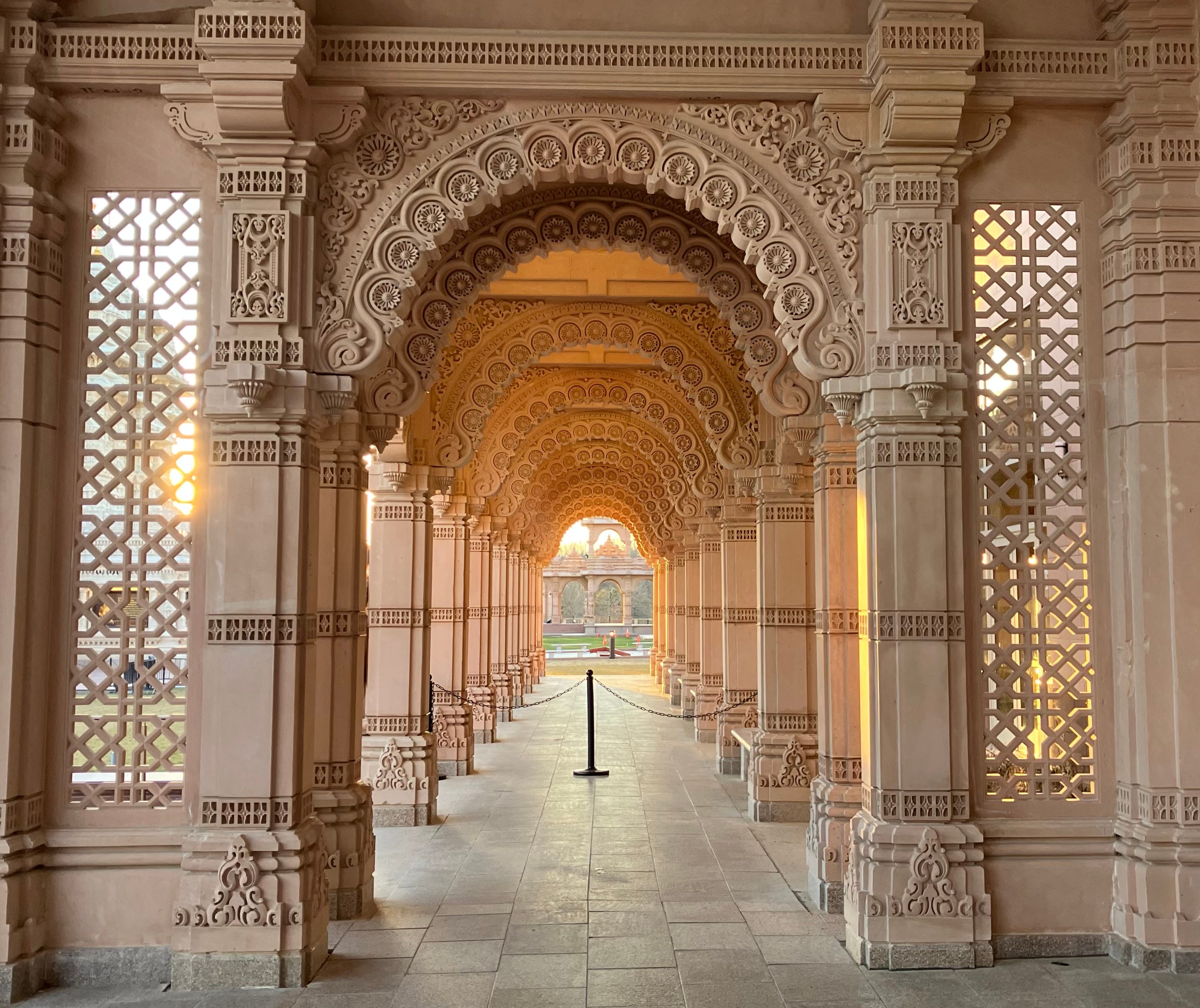
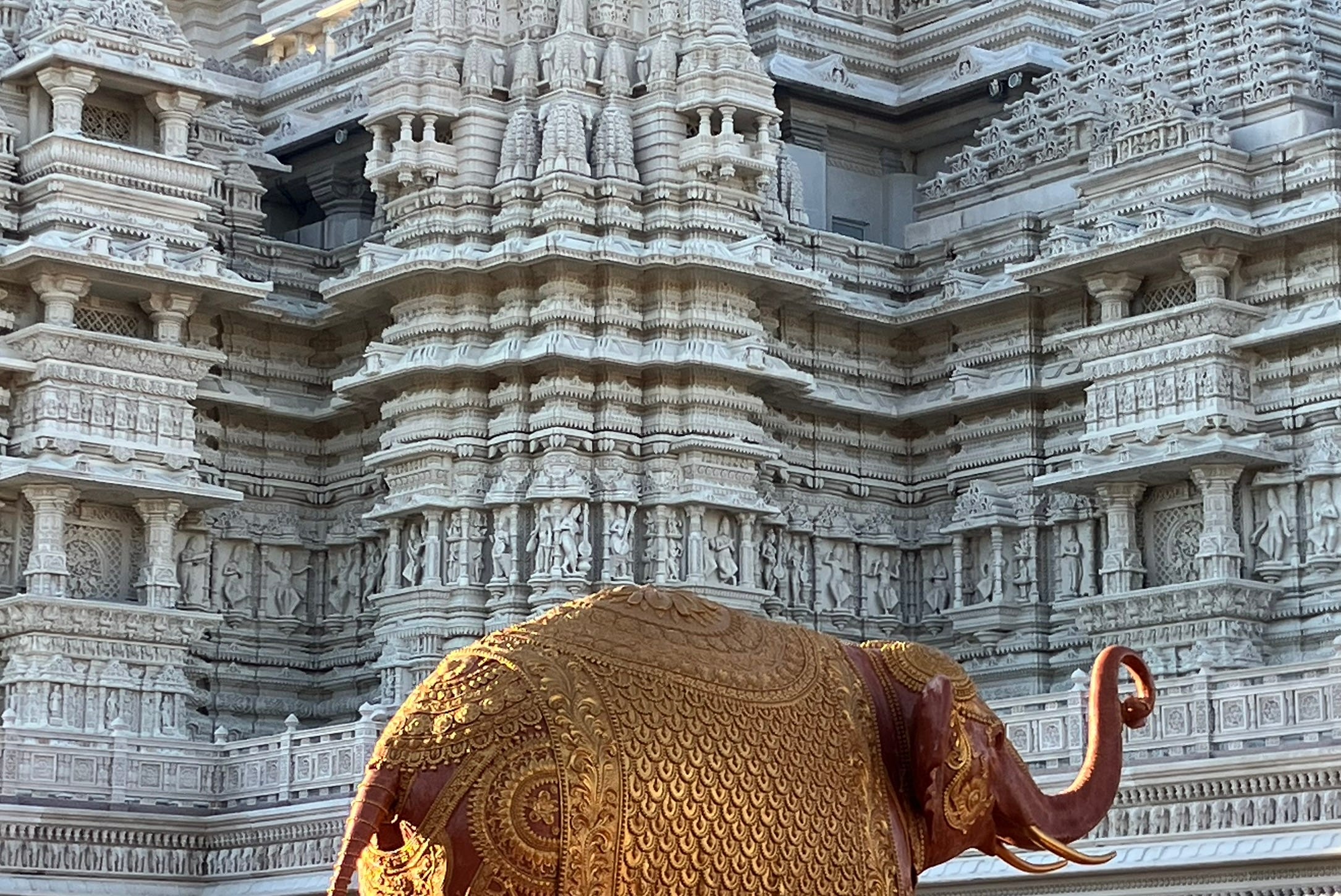
The temple is sensational. Despite its grand size, the level of detail is extraordinary. Every centimeter of marble is beautifully and intricately carved.
The temple is even more stunning on the inside, where there are over 13,000 individually carved pieces, 58 decorative ceiling designs, and more than 10,000 statues.
Visitors must remove their shoes before entering, and photography is not allowed. Thus, there’s no click-clack of shoes and no queues of selfie-takers. Even when crowded, the place can maintain a calm, hushed ambiance.
Visitors may also be quieted by the realization that what they’re seeing defies description. The temple is so detailed and vast — simply mesmerizing.
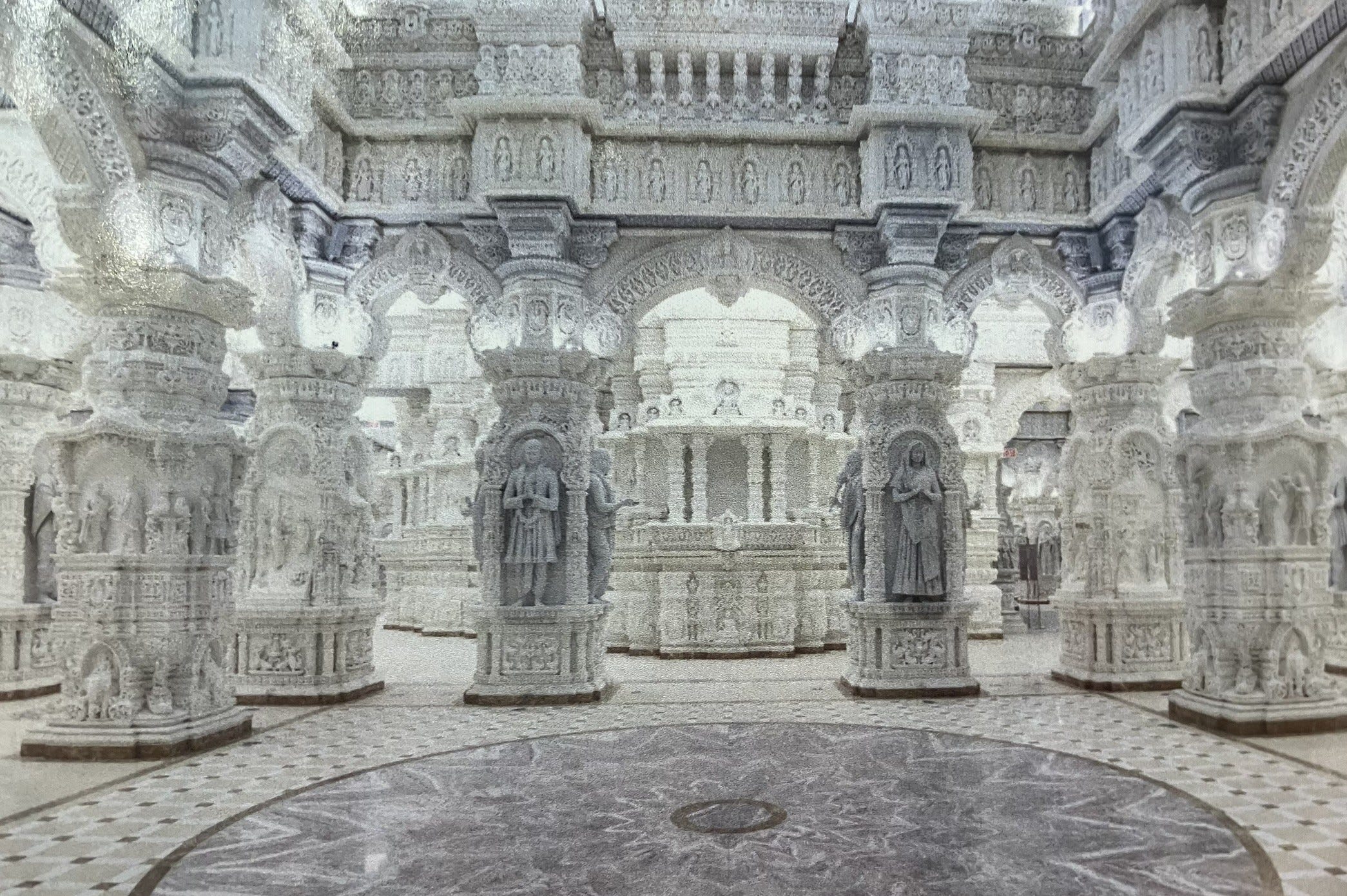
Being inside the temple is like drifting through a shimmering mandala. The space is mostly open, but organized into a series of spaces partially separated by pillars and shrines dedicated to Hindu deities.
There’s no blank space — every iota of material is a tiny work of art, within a larger work of art, within a boundless masterpiece.
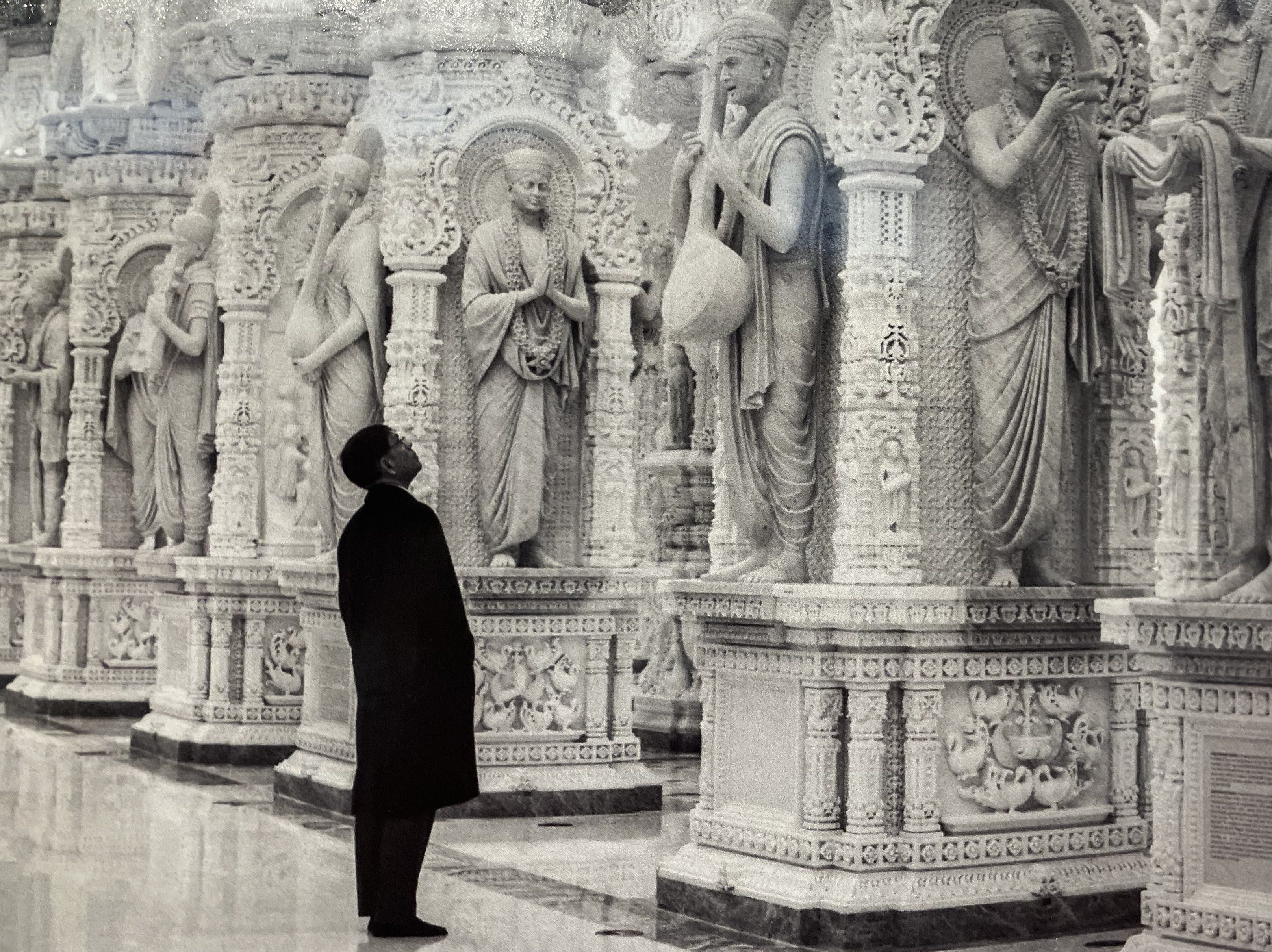
In my life and travels, I’ve come across countless beautiful places of worship. In many places, they tend to be the most impressive examples of local architecture. Usually, they’re very old.
The BAPS temple in Robbinsville is brand new.
If you visit, you’ll surely be impressed. Additionally, you might find food for thought in the temple’s newness, and its controversies — questions about the interplay of religion, class, and money in the modern world.
Wow! I'm curious why you decided to visit. You don't need to say, but it just makes me wonder if I would visit. I would certainly be curious and since I've never heard of it before, it seems off the beaten track. Just thinking something so grand and ostentatious can be found hidden somewhere in New Jersey. I wonder if the other sites had the same controversy. And where does all this money come from. It is a bit mind boggling.